



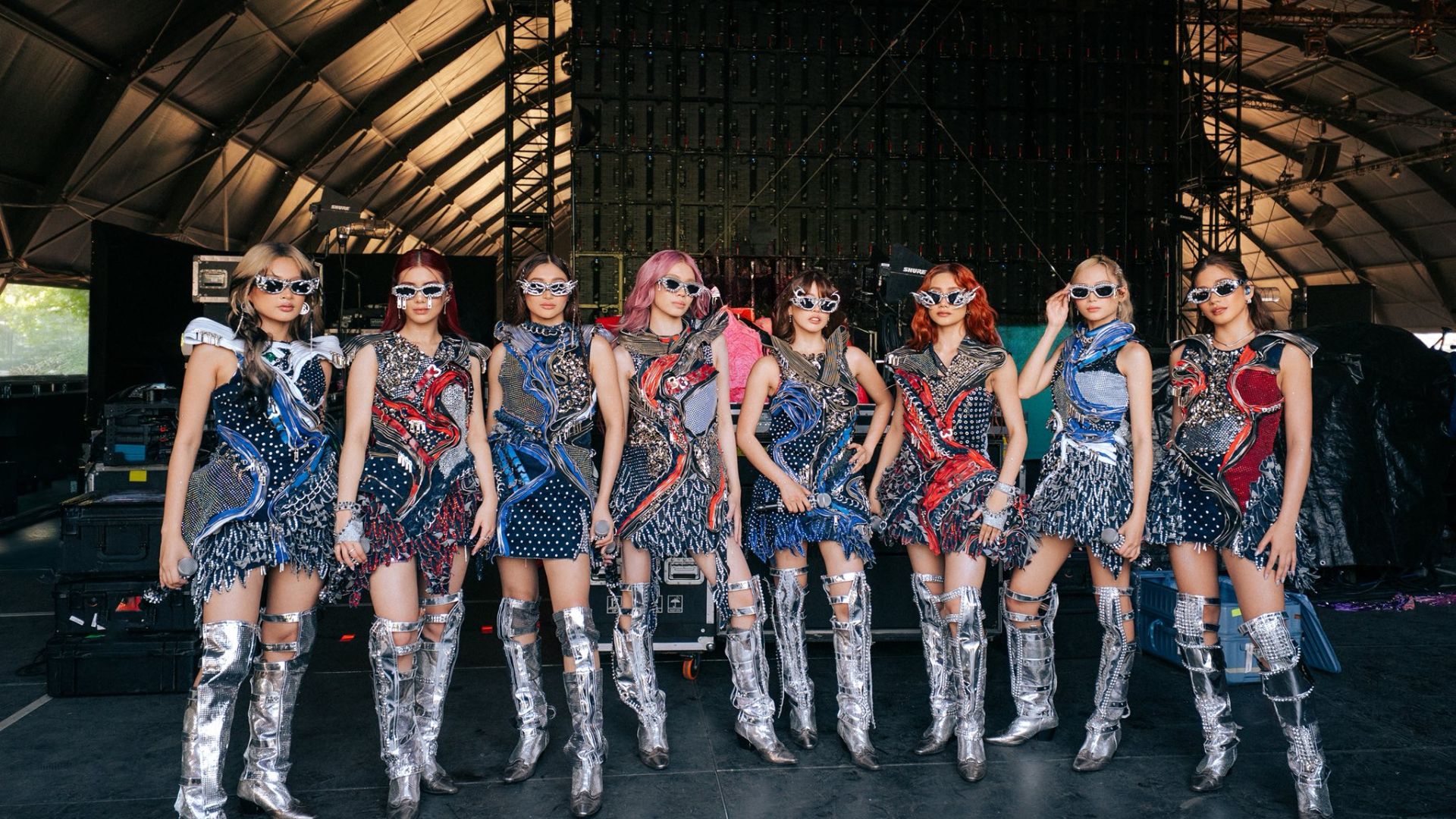







In 2018, when Laurenti Dyogi sat down to design what would eventually become BINI, the concept of a Filipino idol group competing on the world stage was not a mainstream conversation. P-pop was still a genre in its earliest formation. The Korean idol system that inspired him was a template built over decades by entertainment conglomerates with deep pockets and established global infrastructure. The Philippines had neither. What it had, in Dyogi’s view, was talent.
That belief would drive every decision he made over the next eight years, many of them at a time when the country, the industry, and even ABS-CBN itself had not yet caught up to what he was building toward.
The Blueprint Was Always International
Star Hunt Academy, the training program Dyogi conceptualized and launched under ABS-CBN, was not designed to produce local celebrities. As Dyogi told Rappler ahead of BINI’s debut in 2021, Star Hunt Academy was part of ABS-CBN’s plan to enter the international arena. He drew a direct line between the rigor of the idol training model and the goal of putting Filipino artists on the global stage, noting that the discipline and synchronized performance quality the trainees developed were precisely the attributes that gave idol groups their international appeal.
The training itself reflected that ambition from day one. BINI trained under a team that included Kitchy Molina, a former chair of the Department of Voice, Music Theater, and Dance at the University of the Philippines College of Music, along with Austrian-born dance coach Mickey Perz and South Korean training group MU Doctor. The combination of local academic rigor and Korean industry methodology was not accidental. It was a deliberate construction built to produce performers who could move, sound, and present at an internationally competitive level.
Dyogi was also deliberate about how the group would be perceived beyond Philippine borders. The name BINI, derived from the Filipino word “binibini” meaning “young lady,” was chosen to represent the idea of a modern Filipina: confident, independent, and informed. It was a name rooted in Filipino identity but accessible in sound and pronunciation to audiences around the world, a quiet signal that the group was always intended for consumption beyond its home country.
A Vision That Arrived Ahead Of Its Time
When BINI debuted on June 11, 2021, the Philippines was still in the grip of pandemic restrictions, and ABS-CBN was still rebuilding after losing its broadcast franchise the year before. The network had been forced to cut nearly half its workforce and saw revenues fall by 50 percent following the shutdown. The entertainment industry was operating at reduced capacity. It was not a moment that invited big bets on unproven global ambitions.
And yet Dyogi’s language in 2021 was already that of a long-game strategist. When speaking to Rappler about what came next for ABS-CBN Entertainment, he framed the network’s loss of terrestrial broadcast reach not as a limitation but as a pivot opportunity, stating that given the reduction in ABS-CBN’s domestic reach, the goal was to become a regional and global player. That meant co-producing with international partners, distributing content through global streaming platforms, and producing material specifically for the social media and internet era. BINI was central to that pivot.
At that point, the Philippine music market had not yet fully embraced P-pop as a serious commercial genre. BINI’s early releases were met with enthusiasm from a dedicated core fanbase, but the cultural breakthrough that would make them household names took several more years to materialize. Their 2022 track “Lagi” is now recognized by the members themselves as the moment the public’s perception began to shift, but even then, the group was still years away from the viral dominance that would come with “Pantropiko” and the national recognition that followed.
The Long Wait For Validation
Between BINI’s debut and their eventual rise to national prominence, Dyogi continued to invest in the project with a patience that was not always reflected in public sentiment. The Philippine entertainment industry has traditionally rewarded immediate commercial returns. A group trained for years without a guaranteed audience is a difficult proposition in any market, but particularly in one where established stars already command the attention of broadcasters, advertisers, and audiences.
BINI also faced the persistent skepticism that P-pop attracted in those years. As the members themselves acknowledged in interviews with international outlets, the biggest misconception they encountered was that they were simply replicating the Korean idol model rather than building something distinctly Filipino. Their music drew from Filipino, Western, and Latin American influences, and their performances were rooted in a training system that was rigorous but locally adapted. The group insisted on the authenticity of their sound, but proving it took time and accumulated evidence.
Dyogi did not rush the timeline. He continued developing the group’s artistry while quietly pursuing the international strategy that he had articulated from the beginning.
The Strategy Unfolds
The international turn began to visibly accelerate with the introduction of international consultants, a move ABS-CBN CEO Carlo Katigbak championed to guide the label in navigating the global music industry. Through international agents, BINI was connected with promoters at Live Nation and All Things Live. The strategy that followed was built on proof of audience rather than prestige. According to Dyogi’s own account in an interview on the KC After Hours podcast with Karmina Constantino, the goal was to demonstrate to promoters that BINI could draw real crowds in international markets.
The BINIverse World Tour 2025, which Dyogi described plainly as an investment rather than a revenue exercise, served as that demonstration. Shows in Dubai, Los Angeles, and San Francisco gave non-Filipino promoters concrete evidence that BINI’s audience extended well beyond the Philippine diaspora. The risk was real: a month away from more lucrative domestic opportunities, undertaken at a time when ABS-CBN was still operating at significantly reduced financial capacity. The tour generated no profit by design. Its only intended output was the impression it would make on the people who controlled festival lineups.
It worked faster than Dyogi had expected. He later admitted he had anticipated needing two or three more world tours before the group would gain traction with key international decision-makers. Instead, the Coachella invitation came after just one.
The Moment The Bet Paid Off
By the time BINI took the Mojave Stage at Coachella 2026 on April 10, the accumulation of years of international positioning was visible in the result. Their performance generated over one million social media mentions within hours, trended at number one worldwide on X, and produced the most-viewed Coachella 2026 performance by a female act on Instagram. Global search interest peaked at a perfect score of 100 on Google Trends. International media covered their set not as a curiosity but as a defining moment of the festival.
The milestones that came before Coachella told the same story in smaller installments. In July 2024, BINI became the first Filipino pop group to perform at KCON Los Angeles, the world’s largest Korean culture festival. In November 2024, they became the first Filipino act to win the Best Asia Act award at the MTV Europe Music Awards, competing against and defeating acts from South Korea, Japan, Indonesia, and Malaysia. In May 2025, all eight members were named to Forbes Asia’s 30 Under 30 list under the Sports and Entertainment category, recognized as the only girl group on the roster that year. By 2025, BINI had surpassed one billion all-time streams on Spotify. Their BINIverse World Tour made them the first Filipino act to sell out the Philippine Arena’s 50,000-seat capacity.
Each of those milestones was the product of a vision Dyogi articulated in 2018 and pursued without deviation through a pandemic, a network shutdown, and years of building an audience that the industry had not yet confirmed would materialize.
What The Long Game Looks Like
The Signals World Tour, BINI’s second international run announced in the days following Coachella, now includes dates across Asia, Europe, and North America, with a stop at London’s OVO Arena Wembley among the confirmed venues. The group that Dyogi once trained in a locked-down compound during a pandemic, whose debut was delayed by a franchise denial that threatened the entire project, is now playing rooms that the Philippine music industry had not previously accessed.
Dyogi’s bet in 2018 was not simply that Filipino talent was world-class, though that belief was genuine. The deeper bet was that a structured, long-horizon investment in that talent, designed from the start with the global market in mind, would eventually produce an outcome that the domestic market had not prepared anyone to expect. It took eight years. It required surviving institutional collapse, financial constraint, and sustained skepticism from an industry that tends to reward the immediate over the durable.
In April 2026, on a stage in the California desert, BINI performed to a global audience that had no reason to know their names a year earlier. The world caught up to a vision that had been in motion long before the Philippines was ready for it.