











Speaking from a panel held today at the Cannes Film Festival, Cate Blanchett, actor, producer and global Goodwill Ambassador for UNHCR, the UN Refugee Agency, together with International Film Festival Rotterdam’s (IFFR) Hubert Bals Fund, unveiled Mohammed Amer, Annemarie Jacir, Akuol de Mabior, Bao Nguyen and Rithy Panh as the five recipient filmmakers for the second cycle of the Displacement Film Fund (DFF) short film grant scheme. The Fund, which is backed by a coalition of leading film industry experts, creators, business leaders and philanthropists, was established in 2025 to champion and fund the work of displaced filmmakers, or filmmakers with a proven track record in creating authentic storytelling about the experiences of displaced people. Each of the nominated filmmakers will be bestowed with a production grant of €100,000, with their completed projects having their World Premieres at IFFR 2027, running 28 January – 7 February.
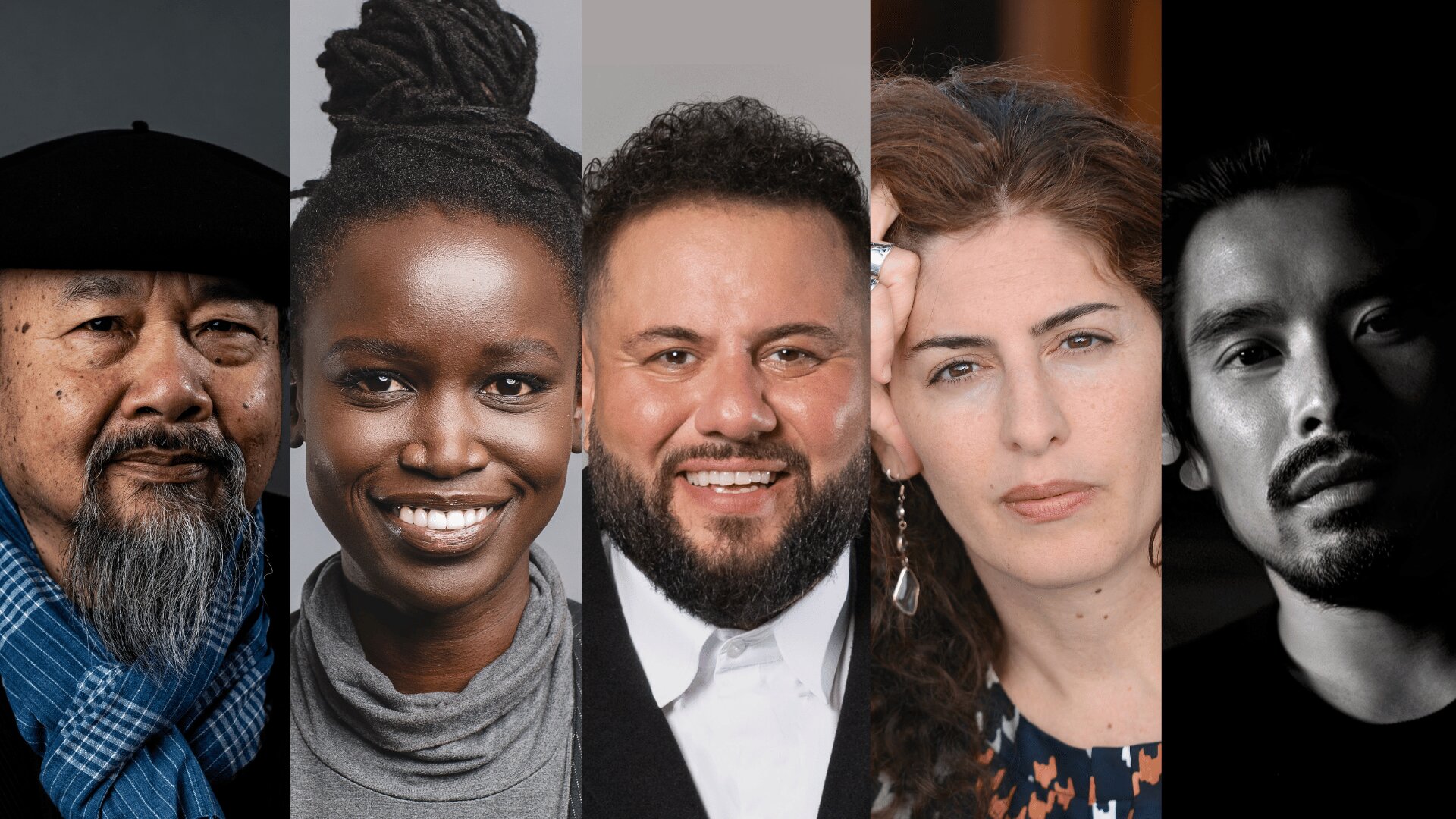
The panel featured Cate Blanchett, alongside new grant recipients Mohammed Amer, Annemarie Jacir, Akuol de Mabior and Bao Nguyen. The discussion was moderated by IFFR’s Managing Director, Clare Stewart, and also addressed the evolution of the fund as it enters its second cycle, the recipient filmmakers and their projects, and wider industry actions in support of displaced filmmakers.
For the 2025 pilot edition of the Fund, Maryna Er Gorbach, Mo Harawe, Hasan Kattan, Mohammad Rasoulof and Shahrbanoo Sadat were each awarded with the production grants. Their films (Rotation, Whispers of a Burning Scent, Allies in Exile, Sense of Water and Super Afghan Gym) had their world premieres at IFFR 2026 and were met with sold-out audiences and widespread acclaim including a five-star review by Peter Bradshaw in The Guardian. It was also announced today in Cannes, where Japan is the Marché du Film’s 2026 Country of Honour, that the inaugural collection will screen at Tokyo International Film Festival in October. Additionally, a theatrical screening run has been confirmed at New York’s Film Forum in the autumn, which will qualify them for Academy Award consideration. The films will screen once again in Rotterdam as part of a special programme at Fenix and LantarenVenster marking World Refugee Day on 17 June. Further festival selections and screenings are expected to be announced in coming months.
The new grant recipients and their projects are:
Filmmaker: Mohammed Amer
Mohammed “Mo” Amer is an award-winning Palestinian-American comedian/writer/director. Currently starring in the acclaimed two seasons of Netflix’s MO, a semi-autobiographical series. MO was ‘certified fresh’ by Rotten Tomatoes with a rare 100% from critics, and was named one of the best shows of 2022 and 2025 by The New York Times, NY Magazine, and TIME Magazine. The series also garnered Amer a Gotham Award, 2023 Peabody Award and 2025 Peabody Nominee, AFI Honors, and a Television Academy Honor.
Return to Sender (working title) (Palestine/US)
After receiving his refugee travel document, a Palestinian stand-up comedian embarks on the world tour of his dreams, but each new country presents increasingly absurd immigration hurdles that test his emotional and mental resolve.
Filmmaker: Annemarie Jacir
Annemarie Jacir is a Palestinian filmmaker, writer and producer who has premiered films in Berlin, Venice, Cannes, Locarno and Toronto. All four of her feature films were selected as Palestine’s Oscar entries. Her acclaimed Salt of this Sea (2008) was the first film to be shot by a Palestinian female director and her second work to debut in Cannes. With a commitment to mentoring, training and hiring locally, Annemarie actively promotes independent cinema in the region. Her latest feature Palestine 36, her most ambitious project to date, was shortlisted for the Academy Awards and received multiple international awards including the Grand Prize in Tokyo International Film Festival. Annemarie lives and works in Palestine.
Deconstruction (working title) (Palestine)
Set in Haifa – a city built on layers of presence and absence, memory and reinvention – Deconstruction follows a man navigating the in-between as the past is uncovered, rearranged, sold, and made new.
Filmmaker: Akuol de Mabior
Akuol de Mabior is a South Sudanese filmmaker who grew up in Kenya and was born in Cuba. She has directed one feature-length film and four shorts. No Simple Way Home (2022), her feature-directorial debut, was the first South Sudanese film to screen at the Berlin International Film Festival. The film went on to win the Dok.horizonte Award at Dok.fest Munich and was nominated for two International Documentary Association awards: best documentary and best writing. Believing that the perspectives of African women are undervalued, she aims to create stories for the screen that reach African audiences and encourage a renewed African imagination.
Traces of a Broken Line (working title) (South Africa/South Sudan)
War breaks a lineage, forcing a mother to preserve what she can no longer pass down.
Filmmaker: Bao Nguyen
Bao Nguyen is a Vietnamese American filmmaker and founding partner of EAST Films whose work explores memory, migration, identity, and the emotional lives shaped by history. He recently produced The Dream Is a Snail, the first Vietnamese short film ever selected in competition at Cannes. His directorial work includes The Stringer, which premiered at Sundance and earned four Emmy nominations; Be Water, about cultural icon Bruce Lee; The Greatest Night in Pop, which won a PGA Award and Critics Choice Award; and BTS: The Return, a Netflix documentary that reached the Top 10 in 85 countries. As a producer, his credits include Nước 2030, a Vietnamese science fiction film that opened the 2014 Panorama section of the Berlinale and Ròm, winner of the New Currents Award at Busan 2019. He is the son of Vietnamese refugees who left Vietnam in 1979 and was born in the United States shortly after their arrival.
How to Ride a Bike (working title) (US/Vietnam)
A Vietnamese refugee father who never learned to ride a bike tries to teach his young son, and when he fails, begins learning in secret, confronting a lifelong shame he has carried since boyhood.
Filmmaker: Rithy Panh
Rithy Panh is an internationally acclaimed Cambodian filmmaker, writer, and producer whose work has profoundly shaped contemporary world cinema through its exploration of memory, trauma and the legacy of the Khmer Rouge regime. His films, including The Rice People, S21: The Khmer Rouge Killing Machine, The Missing Picture, Exile, Graves Without a Name, and Everything Will Be OK, have premiered and received major awards at Cannes, Venice, and the Berlinale. The Missing Picture won the Un Certain Regard Prize at Cannes and received an Academy Award nomination for Best Foreign Language Film. Beyond his filmmaking, Panh is deeply committed to supporting emerging filmmakers and preserving Cambodia’s audiovisual heritage. He founded the Bophana Center in Phnom Penh, dedicated to film archives, education, and creative training for new generations of Cambodian artists.
Time… Speak (working title) (France/Germany)
An exiled filmmaker returns to the broken fragments of his memory – shattered figurines, archives, and silences – to reconstruct through cinema a form of life in which the disappeared continue to speak.
DFF is spearheaded by actor, producer and UNHCR Global Goodwill Ambassador Cate Blanchett. For the second edition of the fund, IFFR’s Hubert Bals Fund returns as Management Partner, Amahoro Coalition, Droom en Daad, Master Mind, the Tamer Family Foundation and UNIQLO return as Founding Partners, and UNHCR – the UN Refugee Agency – remains Strategic Partner. The SP Lohia Foundation joins as a new Major Partner.
The purpose of the Fund strongly aligns with the HBF’s history of supporting underrepresented voices, especially with filmmakers from countries where local filming and infrastructure is lacking or restrictive.
Cate Blanchett, DFF co-founder and leader, said: “Our first round of DFF shorts have been met with huge enthusiasm from both the industry and our partners, while challenging expectations about what stories of displacement can look like on screen. The short form is a fantastic medium for these narratives and the way audiences are connecting with the first five films is extraordinary. I’m heartened by the success of our first cohort and thrilled to be revealing the next group of artists to be supported. We’re grateful to be hosted by Thierry Frémaux and the Cannes Film Festival who continue to champion our cause and make space for us in this most celebrated annual gathering of cinema.”
Clare Stewart, Managing Director IFFR, and Tamara Tatishvili, Head of The Hubert Bals Fund, said: “It is a privilege to return to Cannes with the Displacement Film Fund, following the remarkable journey we’ve embarked on with the first cohort and the success of their premiere screenings at IFFR 2026. The recipients of our second cycle once again reflect an extraordinary breadth of filmmaking talent – with each navigating their own personal experiences of displacement – and we are proud to help bring their vital stories into the spotlight. At a time of ongoing global uncertainty, our commitment to maintaining this fund only deepens, alongside our belief in championing film as a powerful force for encouraging empathy and positive change.”
With one in every 70 people on earth forcibly displaced due to conflict, war, or persecution, the global community is witnessing an unprecedented crisis. The Displacement Film Fund was first initiated at UNHCR’s Global Refugee Forum, the world’s largest gathering dedicated to addressing challenges faced by refugees and their host communities.
The Filmmakers were selected for the 2026 Fund following a two-step process developed during the pilot year. A longlist of filmmakers was determined by a Nominations Committee and a Selection Committee decided on final recipients. For the second cycle, the Nominations Committee included journalist and documentarian Waad Al Kateab (We Dare to Dream, For Sama), director and screenwriter Agnieszka Holland (Green Border), UNHCR supporter Ke Huy Quan, Head of the Hubert Bals Fund Tamara Tatishvili, IFFR Managing Director Clare Stewart, and the DFF Partners.
The Selection Committee was chaired by Cate Blanchett and included filmmaker Jonas Poher Rasmussen, IFFR Festival Director Vanja Kaludjercic, film and stage producer Barbara Broccoli (James Bond film franchise), educator, activist and refugee Aisha Khurram, and filmmaker Mo Harawe who was selected for the DFF’s first cycle.