



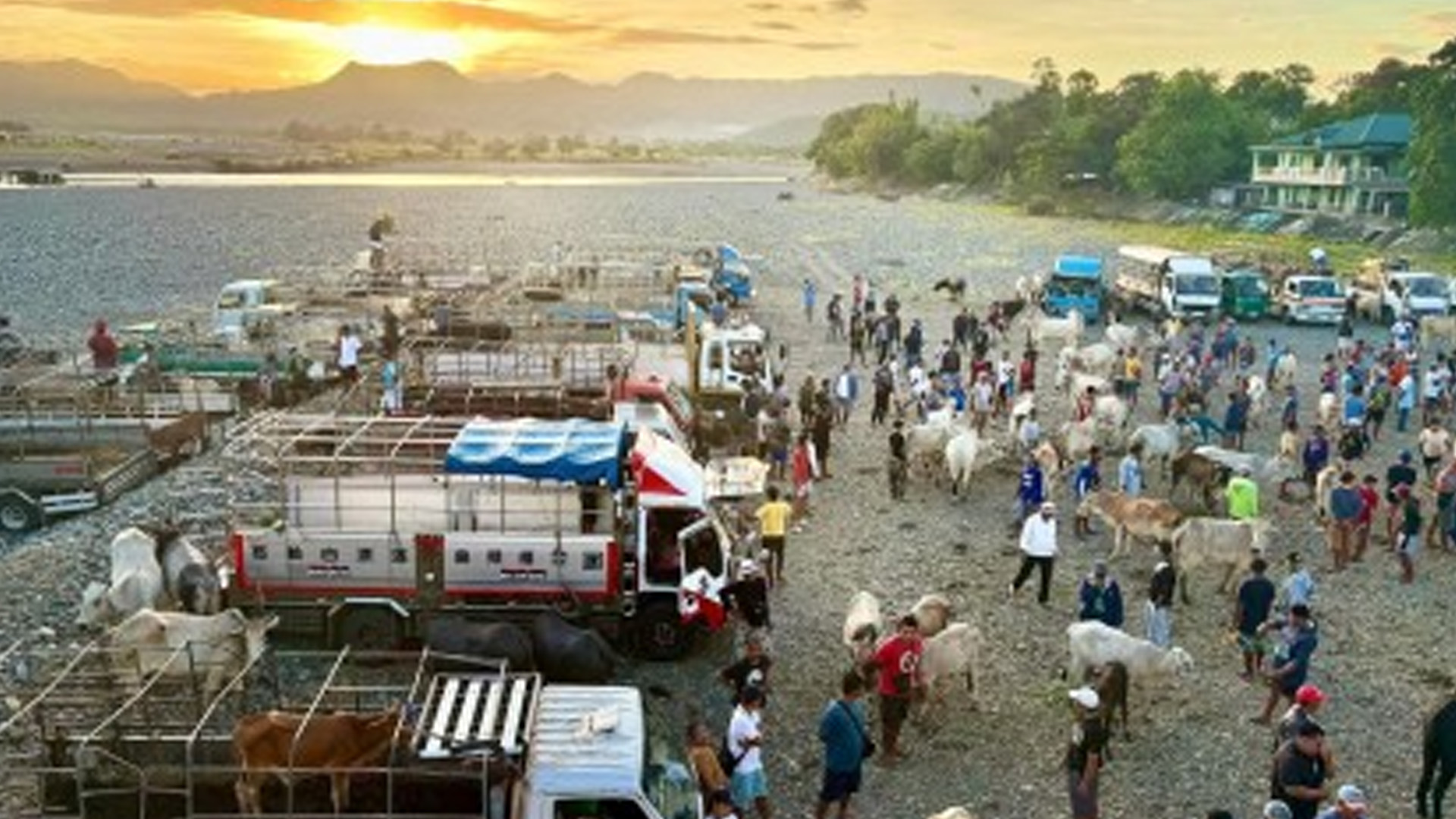







The city government of Batac is reviving its “Dayo,” a traditional livestock auction market where local farmers, buyers, and traders gather to trade cattle and carabaos, with the first session set for June 21 at the new Bagsakan area near the public market.
In the olden times, these open markets were called “dayo” (meaning visitor or out-of-town trader) because traders from outside the province and region would converge to negotiate directly with buyers and sellers, agreeing on price without a formal bidding system.
“Dayo is a valued Batac tradition that connects livestock raisers and buyers while supporting local livelihoods and agriculture,” the city government said in a statement Wednesday.
City agriculturist Mark Allan Abad said the livestock auction market in Batac had slowed since the pandemic due to the lack of a permanent space.
“We hope to make the operation sustainable again through its new and better location,” he said.
City tourism officer Angelica Simisim-Yumul said Dayo’s revival aims to attract more visitors to Batac, particularly the younger generation.
“Dayo is a cultural experience showing a tradition that is not common in most places, and in the present generations, especially on animal trading,” she said, adding it complements the city’s agri-tourism programs once fully operational. (PNA)