










To ensure that no Filipino is left behind during calamities, the Department of Social Welfare and Development (DSWD) continuously expands its social protection initiatives through the Buong Bansa Handa (BBH) program.
In his State of the Nation Address (SONA) last year, President Ferdinand R. Marcos Jr. tasked various government agencies to improve the welfare and livelihood of every Filipino. A crucial part of this mandate is ensuring the safety and security of the public during disasters and calamities.
The DSWD immediately responded by working round-the-clock to develop and implement programs and system enhancements to ensure efficient disaster response delivery under the BBH banner.
“Kung matatandaan po natin (If we recall), President Ferdinand R. Marcos Jr. said in his previous State of the Nation Address and I quote: ‘Hindi tayo dapat tumigil sa ating mga ginagawang paghahanda, dahil ang banta ay patuloy na naririyan (We should not stop our preparation because the threat is continuously there),” Assistant Secretary Irene Dumlao of the DSWD Disaster Response and Management Group said in a news release Sunday.
“Our President also said ‘mahalagang itanim ang prinsipyo ng (it’s important to implant the principle of) continuous improvement,’ at ito naman po mismo ang ginagawa ng DSWD (and it is exactly what the DSWD is doing).”
DSWD Secretary Rex Gatchalian said every single hour matters during emergencies, according to Dumlao.
The BBH program reinforces efficient humanitarian logistics and response delivery through a two-pronged supply chain mechanism that combines government resources with private sector capacities.
DSWD prepositions food and non-food items in 1,010 warehouses nationwide. This network includes 15 hubs, 76 spokes, and 919 last-mile facilities designed to bring relief goods closer to geographically isolated and disadvantaged areas.
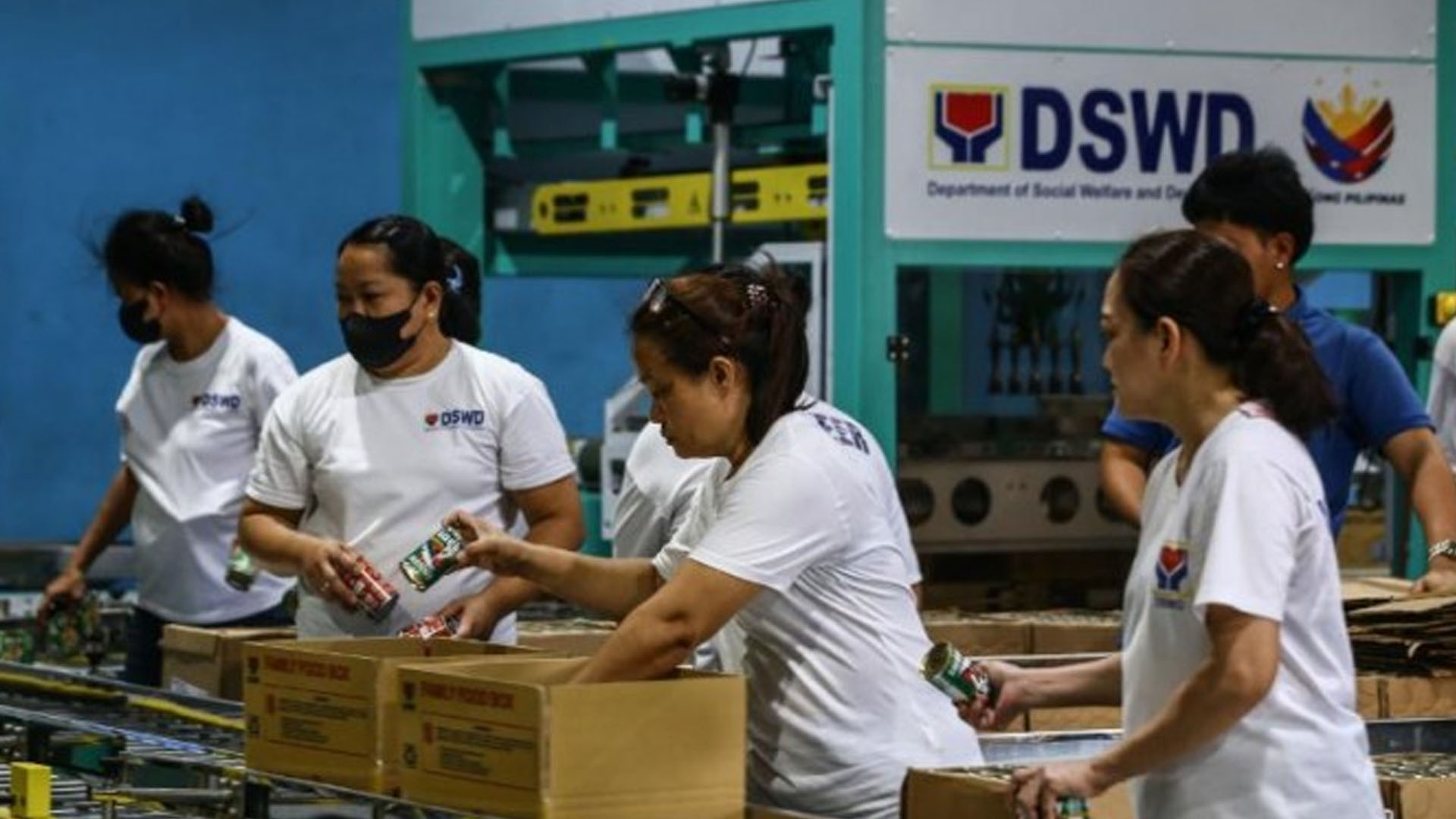
To date, the DSWD has produced and prepositioned at least 4.74 million family food packs (FFPs) across the country.
To speed up production of FFPs, the DSWD invested in mechanized repacking systems in its two major production hubs — the Luzon Disaster Resource Center in Pasay City and the Visayas Disaster Resource Center in Mandaue City, Cebu.
Through the BBH, the DSWD keeps sufficient stockpiles of food to ensure that it is ready to respond whenever disasters occur.
“Everyday, the DSWD is prepared,” Dumlao assured.
To further innovate its disaster response, the DSWD is tailoring its relief efforts to better cater to vulnerable groups and those requiring immediate assistance.
“We are also innovating. The Department provides ready-to-eat food boxes for immediate consumption during disasters and for stranded individuals, as well as maternity kits for pregnant and lactating mothers, hygiene kits, timely distribution of emergency cash transfer and many others like tents, mobile kitchens, and command centers,” Dumlao said.
Aside from FFPs and other relief items, the DSWD deploys a Mobile Command Center, which enables speedy and sustained communication lines during disasters, and a mobile kitchen to provide hot meals for internally displaced persons to avoid FFP fatigue.
The Department has water tanks and water filtration facilities that go around disaster-affected communities to help provide clean water.
Along with initial relief response provided, the provision of emergency cash transfer aid follows to facilitate recovery measures. (PNA)