



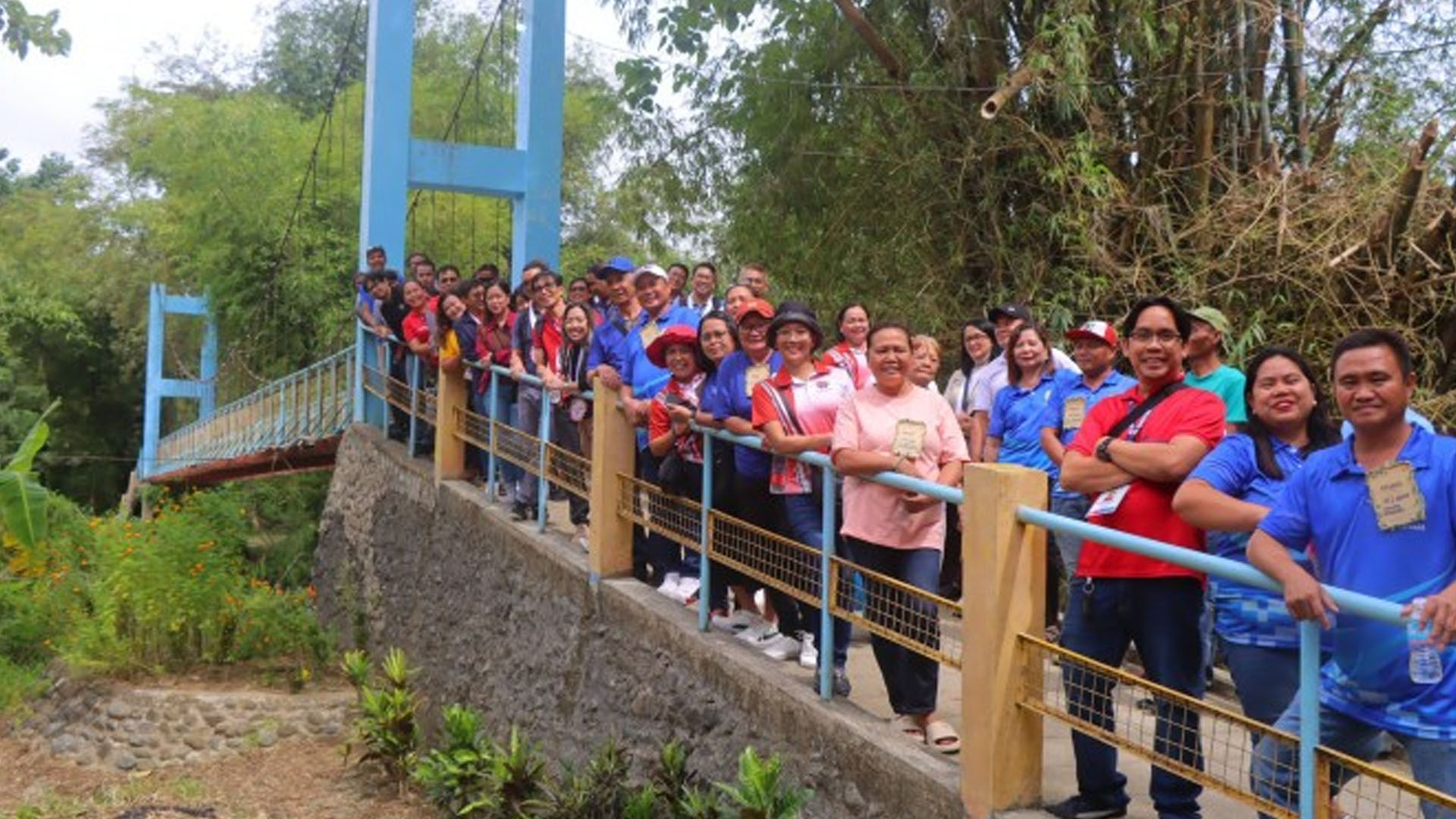







The Department of Social Welfare and Development (DSWD) continues to empower Indigenous Peoples (IPs) nationwide by providing opportunities for their meaningful participation within the community through the community-driven development (CDD) approach of the Kapit-Bisig Laban sa Kahirapan–Comprehensive and Integrated Delivery of Social Services (KALAHI-CIDSS).
Since the program’s inception in 2003, KALAHI-CIDSS has benefited a total of 2,489,307 IP households nationwide, enabling them to take an active role in identifying community needs and participating in the planning, implementation and monitoring of development projects that directly affect their communities.
KALAHI-CIDSS Director and National Program Manager Bernadette Mapue-Joaquin said the participation of IP communities is essential in ensuring that development interventions are responsive to their actual needs and grounded in their culture, traditions, and indigenous knowledge.
“Hindi lang natin tinitingnan ang ating IPs bilang beneficiaries ng mga programa. They are partners in development. Sa CDD approach, may pagkakataon silang makilahok mula sa pagpaplano hanggang sa pagpapatupad at monitoring ng mga proyekto (We are not looking at IPs as just program beneficiaries. They are partners in development. Through the CCD approach, they also have the opportunity to participate in the planning up to the implementation and monitoring of the projects),” Mapue-Joaquin said in a news release on Tuesday.
Under the CDD approach, communities are empowered to identify their most pressing concerns, determine appropriate solutions and collectively implement projects based on their local priorities.
For IP communities, this approach also provides an avenue for their traditional knowledge, cultural practices, perspectives and experiences to be considered in development planning.
The DSWD recognizes that these elements are integral to the identity and resilience of IP communities and can contribute to more inclusive and sustainable community development.
“Kapag pinag-uusapan natin ang development, dapat inclusive ito at culturally sensitive. We have to make sure na hindi nawawala o naiiwan ang kultura, tradition, at indigenous knowledge sa proseso ng development (Development should be inclusive and culturally sensitive. We have to make sure that culture, tradition and indigenous knowledge are nor left behind in the development process),” Mapue-Joaquin said.
The KALAHI-CIDSS uses CDD to strengthen the participation of communities in poor and geographically isolated and disadvantaged areas (GIDA), allowing them to take greater ownership in addressing local development concerns.
This approach is also reflected in the DSWD’s new modality, the Panahon ng Pagkilos: Philippine Community Resilience Project, wherein the significant population share of IPs is among the criteria considered in selecting the 500 municipality-beneficiaries.
The criterion recognizes the importance of the culture, traditions, experiences and practices of IP communities in strengthening their resilience and advancing local development.
“Our goal is to work with all vulnerable sectors, including the IPs, respect what they bring to the table, and make sure that social protection and development interventions are responsive to their actual needs,” the KALAHI-CIDSS director said.
The DSWD’s commitment to IP empowerment is in recognition of the sector’s role in nation building as the country recently commemorated the National Indigenous Peoples Day (NIPD) and the International Day of the World’s Indigenous Peoples (IDWIP) on Aug. 9.
The celebration is in support of the IDWIP established by the United Nations General Assembly to raise awareness of the rights, needs and contributions of IPs around the world.
“Ang paggunita natin sa NIPD ay hindi lamang tungkol sa pag-celebrate ng kultura at tradisyon ng ating mga IPs (The observance of NIPD is not only about the celebration of the culture and tradition of the IPs). It is also a reminder for us to recognize their rights, their knowledge, and their important role in shaping their communities,” Mapue-Joaquin said.
As the DSWD continues to advance social protection and community development, the Department recognizes IPs not only as recipients of government interventions but as active partners whose knowledge, culture and participation are vital to building inclusive, resilient, and empowered communities. (PNA)