



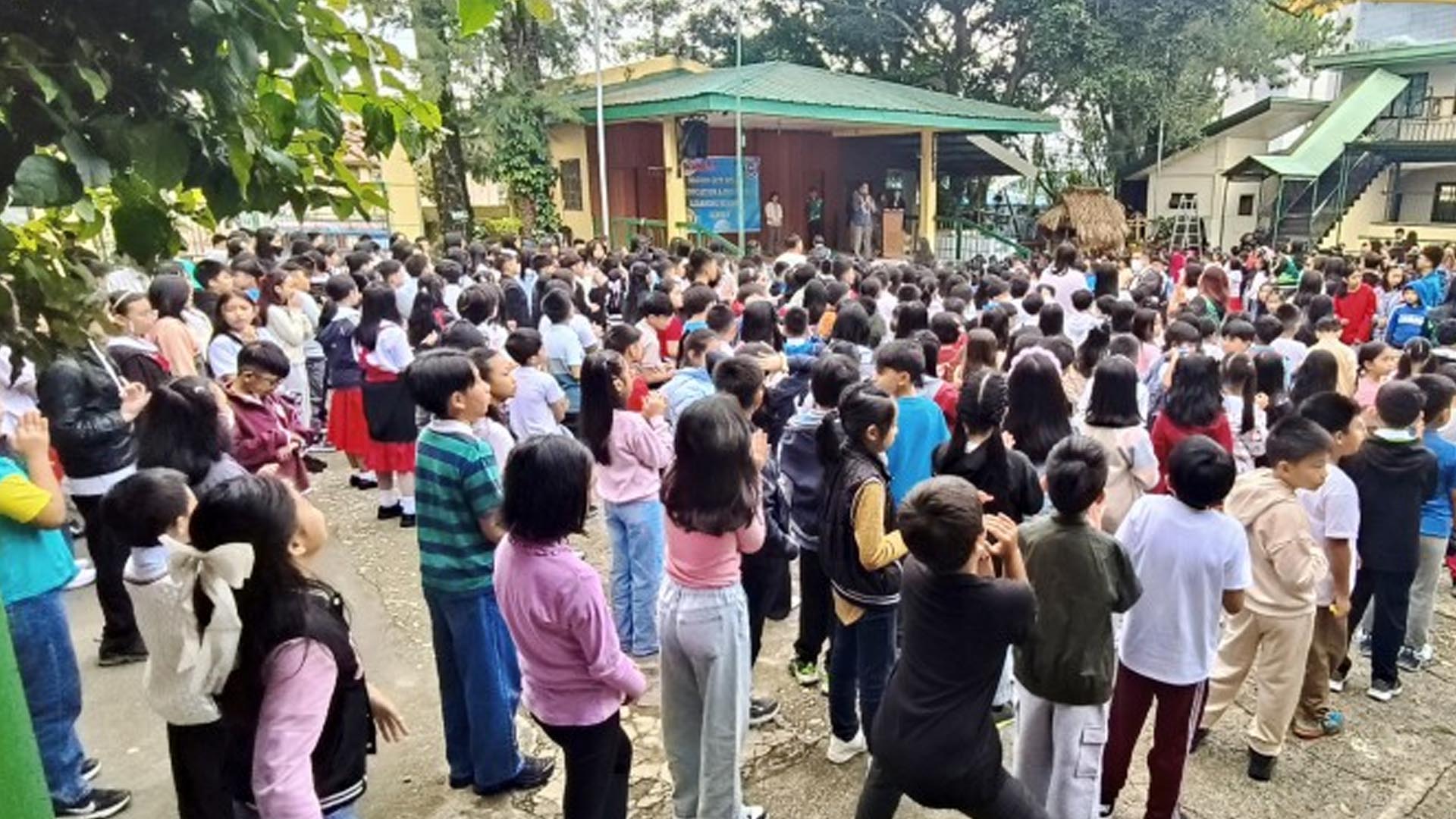







The Department of Education in Baguio is targeting 9,011 elementary school learners for its school-based feeding program to address malnutrition, a division official said.
Cynthia Cadawan, a nurse at the DepEd-Baguio Schools Division Office, said the beneficiaries include all kindergarten and Grade 1 learners identified as needing dietary supplementation, as well as severely wasted and wasted learners in Grades 2 to 6.
Most of the beneficiaries are in kindergarten and Grade 1, while others are from Grades 2 to 6 and the secondary level, according to a report submitted to the Baguio City Nutrition Committee.
The feeding program will run in two phases for a total of 180 to 200 days. The first 21 days will provide milk, followed by 89 days of hot meals and nutritious food products. The remaining days will use a cycle menu of nutritious food products.
Implementation was delayed this school year because of class cancellations and suspensions caused by inclement weather but is expected to begin soon, the report said.
The city has 30,744 public elementary learners. Nutrition assessments found 403 severely wasted, 903 wasted, 2,304 overweight, 758 obese, 380 severely stunted and 2,239 stunted learners.
Among 26,525 assessed secondary learners, 271 were severely wasted, 964 wasted, 1,301 overweight, 198 obese, 331 severely stunted and 2,178 stunted.
Dr. Soraya Faculo, Baguio SDO superintendent, said the feeding program is part of the Department of Education’s Oplan Kalusugan sa Department of Education, or OK sa DepEd, a convergence program covering health and nutrition initiatives for public school learners.
The program is implemented in partnership with local health units, including the Department of Health-Cordillera Administrative Region and the city’s health services office, as well as other stakeholders.
Faculo said OK sa DepEd also covers mental health, water, sanitation and hygiene in schools, deworming, adolescent reproductive health, and medical, dental and nursing services.
She said the school-based feeding program addresses wasting, characterized by low weight for height, and stunting, which results from chronic or recurrent undernutrition and leads to low height for age.
The program undergoes quarterly implementation reviews, including validation and monitoring by participating schools, with results used to guide school health planning and support. (PNA)