



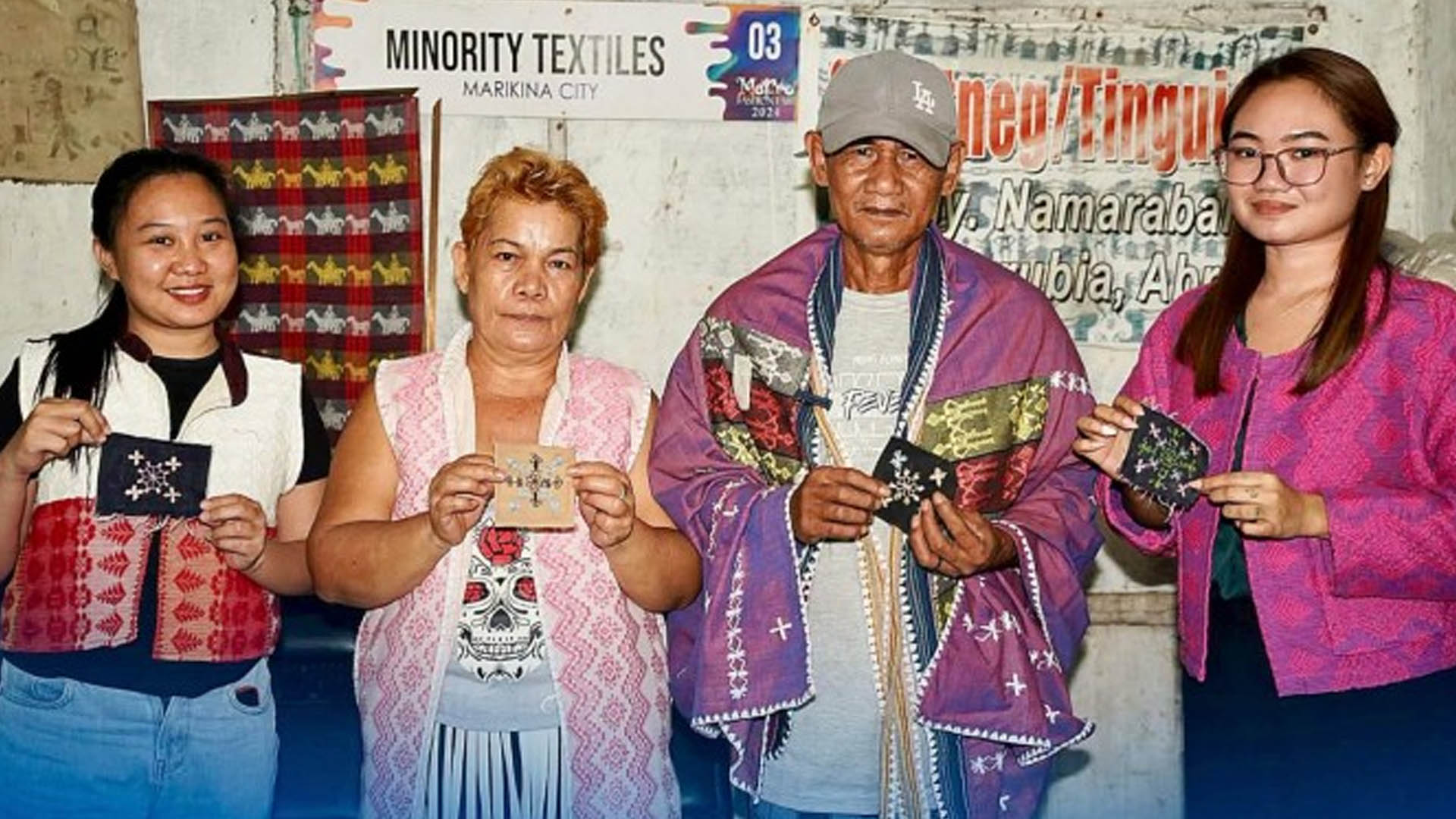







The municipal government of Peñarrubia in Abra is turning to the next generation to keep alive the town’s Tingguian weaving tradition by supporting its integration into the senior high school (SHS) curriculum.
Mayor Geraldine Balbuena said the Peñarrubia Integrated School (PIS) now offers weaving as a subject for SHS students, including lessons on natural dyeing, weaving and embroidery featuring designs that reflect the culture of the Tingguian (Itneg) people.
“We hope that there will be more of our youth who will take interest in making the culture alive,” Balbuena said in a recent interview.
The municipal government has also allocated funds for the purchase of tillar (weaving equipment), threads and other materials needed by students as they learn the traditional craft.
PIS is the town’s first and only public high school, converted from Peñarrubia Central School in 2015.
Balbuena, herself a Tingguian, said preserving their ancestry should include not only intangible cultural practices but also traditional weaving, which allows their heritage to be appreciated beyond their communities.
Abra’s weaving is distinguished from other Cordillera textile traditions by its hand embroidery, locally known as “kinamay,” which features designs rooted in the community’s way of life and traditional beliefs.
Among these is the “sinanpagay,” a rice plant-inspired design representing the importance of rice production to the community.
The “sinantao” depicts a dancing-like person, while “sinankalasag” represents a native shield traditionally used for protection.
The “sinantukak,” meanwhile, resembles a frog and is associated with rituals seeking rain or the cessation of rain, which is important to rice production.
These embroidery patterns reflect the rich folklore and traditions of the Tingguian people, which have been passed down through generations and incorporated into their woven fabrics.
Traditional weaving also uses natural dyes derived from tree bark and plant leaves instead of synthetic chemicals.
Former Peñarrubia mayor Antonio Domesag recalled that his mother, Biana, a native of nearby Manabo town, also practiced weaving, producing straight and checkered designs, as well as the traditional “bidang,” characterized by a plain white background with thin red and orange stripes along the sides.
Family of weavers
The Agaid family, who established the Itneg School of Living Tradition in Barangay Namarabar, is also helping ensure that the heritage continues through the teaching of traditional weaving, hand embroidery, and natural dyeing using tree bark and plants found in the community.
Norma Mina said in an earlier media interview that the family’s contemporary woven products draw inspiration from the traditional craft passed down through generations of Tingguian weavers.
Decades ago, women in Abra commonly wove blankets for their families. The tradition has since evolved into the production of fabrics and finished products such as clothing, bags and scarves, which are now purchased by both local residents and tourists.
Abra woven products have also gained exposure through local and regional trade fairs, national events and international trade fairs held in the country.
From a small weaving area at the family residence, where members of the clan continue to practice the craft, the Agaid family’s work area has expanded to include a classroom where village residents and visitors can learn natural dyeing, weaving and embroidery.
Global fashion
The distinctive embroidery of Tingguian woven fabric has also reached the international fashion market, with Japanese clothing brand Uniqlo commissioning Luis Agaid to produce 1,000 patches featuring Tingguian embroidery for its August collection.
“Among the featured designs are the kukko patterns, geometric motifs inspired by the Itneg people’s agricultural way of life; symbolizing productivity, perseverance and hard work,” the provincial government said in a social media post last week.
Adding pride to Abra’s representation is Luis Agaid Jr., Cultural Master of the Itneg School of Living Tradition in Abra and the only weaver representing Luzon in the collection.
“Every patch carries a story, a living thread of Peñarrubia’s identity, connecting generations and bringing Itneg heritage to a wider world, one stitch at a time,” the provincial government said. (PNA)