



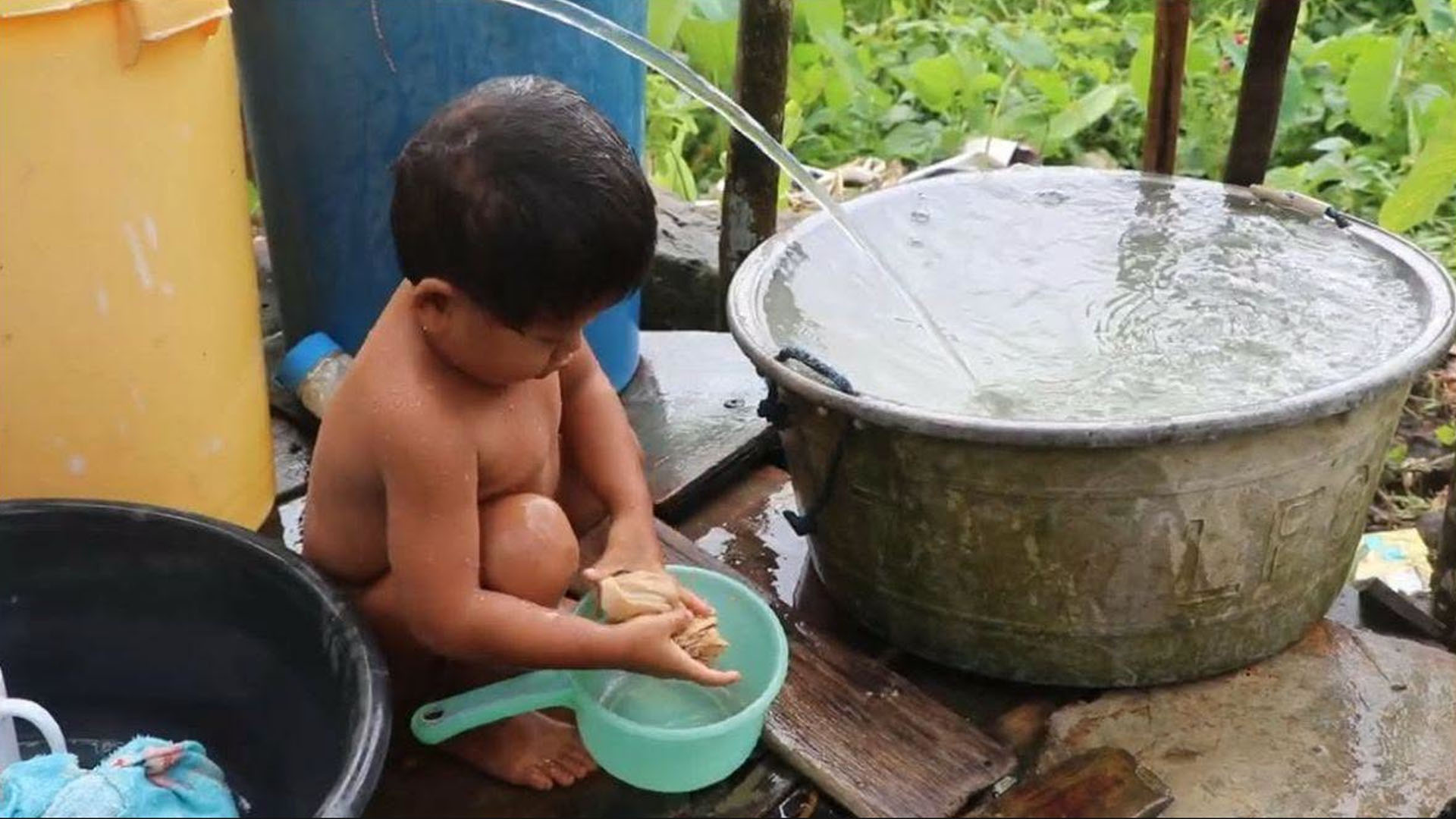







Clean water is now within reach for 70 to 80 Subanen households in Barangay Sipakong, Bacungan, Zamboanga del Norte after the Department of Environment and Natural Resources (DENR) built a 50-cubic-meter Small Water Impounding System (SWIS), providing water for their domestic and agricultural needs.
The Subanen people are among the Indigenous Peoples (IP) of the Zamboanga Peninsula.
With a very strong El Niño ahead, their daily struggles with limited or unreliable water supply are further aggravated.
The DENR said on Wednesday that the SWIS project anticipates possible water shortages due to the projected very strong El Niño, which is expected to last until mid-2027.
The project supports President Ferdinand R. Marcos Jr.’s directive to address water scarcity and improve water security, especially in communities with limited or unreliable supplies.
Environment Secretary Juan Miguel “Mitch” Cuna has emphasized practical interventions to help communities prepare for prolonged dry conditions.
“In Sipakong, that approach is evident in a simple yet important way – storing water closer to the people who need it while protecting the watershed that supplies it,” he said.
Before the project, the DENR said, residents had to walk uphill about 500 meters, or about 30 to 45 minutes from the nearest road, depending on where they live, to reach springs and other flowing water sources.
“After this, they then had to carry heavy pails or water containers along rough paths on the way back. For young people, fetching water meant time spent walking instead of playing, studying, or helping at home. For families, it was another daily task made harder by distance,” the DENR said.
The SWIS, established by DENR-Zamboanga Peninsula, now provides a local source for household and agricultural use, reducing residents’ dependence on springs in the forest.
For Barangay Kagawad Ramon Dampayla, the change has eased families’ daily burden.
“Dili na man me mahago, ug dili na sama sa una nga layo pa among kab’an, dayon karon naa naman jud sa duol (Before, we had to go far just to fetch water. Now, we have a water source nearby),” he said.
Sangguniang Kabataan (Youth Council) Chair Danilo Anticamara Jr. said young people previously had to travel far to find water for drinking because nearby streams were not considered safe for consumption.
“Mao nang ag water system karon nga naa diri sa among barangay dako kaayog katabang sa amo-a, dili lang sa mga pamubo, kung dili pwedi sab mainom. Ug sayon ang among pagpangabo kay naa naman sa among balay, dili na lisod (Now, water is more accessible, while the resource can also support household activities and farming),” he said.
Meanwhile, resident Ofelia Belhot cited the importance of keeping the project operational, noting that losing it would force families to return to springs in the forest.
“Ug mawala ning project mubalik gyud mi sa amo’ang kab’anan nga didto sa lasang, mangita na pud mi ug tubod ug asa dapit ang na-ay agas (If this project were discontinued, we would really have to go back to our previous water source in the forest),” she said.
Beyond household needs, the DENR said stored supply can also support farms and gardens, helping families sustain food production and their livelihoods, particularly during periods of reduced rainfall.
DENR-Zamboanga Peninsula OIC Executive Director Marie Angelique Go said watershed management must protect natural resources while ensuring that they continue to benefit communities.
She stressed that watershed management is not only about protecting forests or managing water, but also about ensuring that the watershed’s resources continue to serve the people who depend on them.
“Projects like this make that connection clear – when we manage water wisely and protect its source, we also strengthen the community’s ability to sustain its livelihood,” she said.
According to the Philippine Atmospheric, Geophysical and Astronomical Services Administration and the World Meteorological Organization, the very strong El Niño is projected to peak around late 2026 and persist through the first half of 2027.
As the country prepares for possible El Niño-related shortages, the DENR said the impounding system could help Sipakong residents and farmers cope with drier conditions, adding that maintaining the facility and protecting the watershed will be essential to sustaining its benefits in the years ahead. (PNA)