











The Philippine economy is expected to remain resilient despite the slower performance in the first half of the year amid external headwinds, the International Monetary Fund (IMF) said.
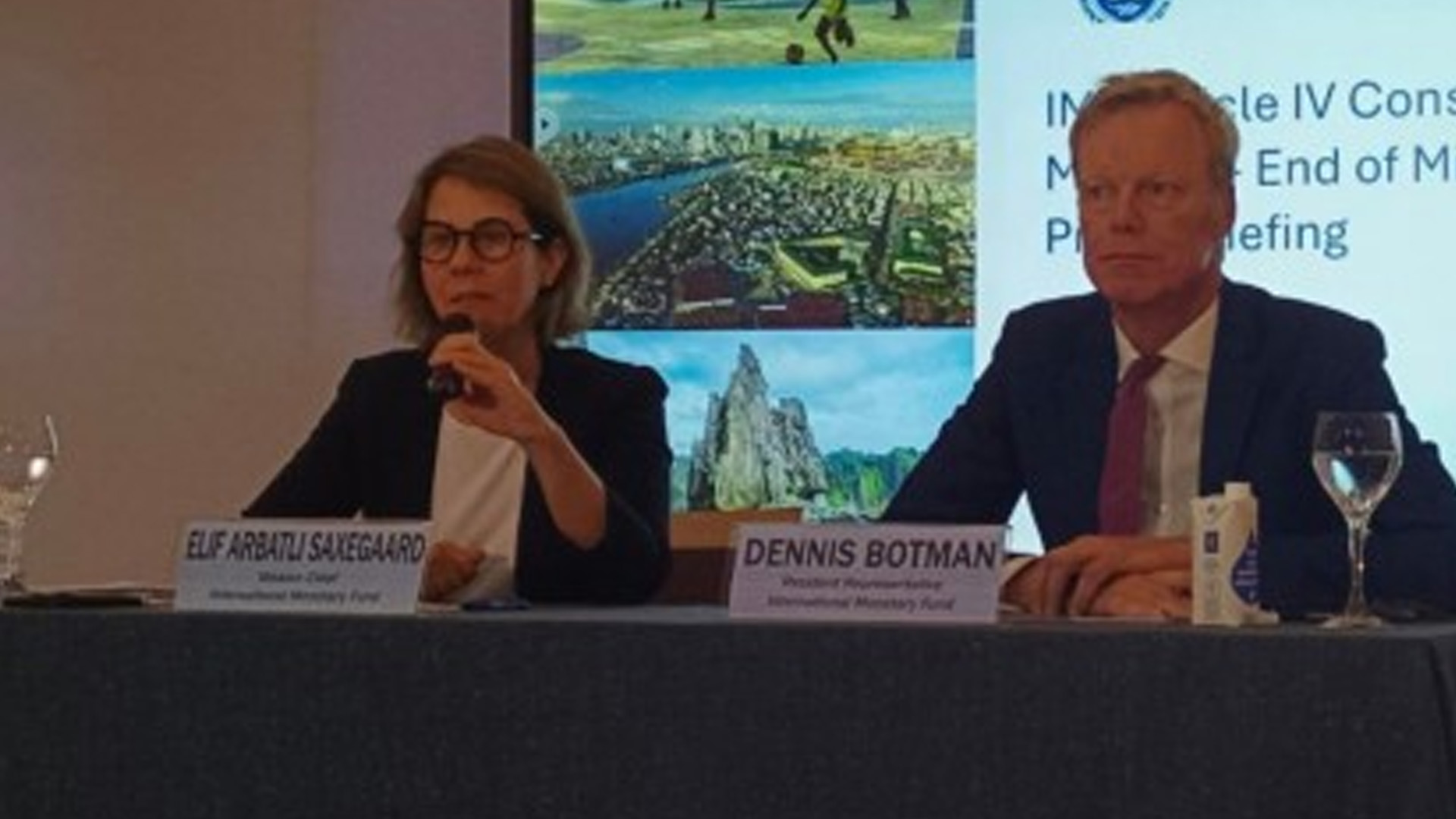
In a briefing at the Bangko Sentral ng Pilipinas office in Manila on Wednesday, IMF Mission Chief Eli Arbatli Saxegaard said the Philippine economy is projected to grow by 5.4 percent this year and 5.7 percent in 2026.
An IMF team led by Saxegaard held meetings in Manila from Sept. 18 to Oct. 1 for the 2025 Article IV Consultation.
The latest projections were lower than the 5.5 percent for 2025 and 5.9 percent for 2026 earlier forecast of the IMF.
“The revision reflects factors related to the first half performance, which was weaker than expected,” Saxegaard said.
She added higher tariffs imposed on Philippine exports to the US will also weigh on exports and investment.
Despite the lower projections, Saxegaard, however, said “the Philippine economy has achieved successful disinflation, and growth remains resilient despite negative external spillovers.”
Economic growth will be supported by monetary easing and recent legislative measures to promote private investment.
“The Philippine economy holds significant potential with a sizable demographic dividend and abundant natural resources. Recent reforms to reduce infrastructure gaps and promote foreign direct investment are welcome; effective implementation remains key to reaping their benefits,” Saxegaard said.
The IMF also cited the importance of negotiating and implementing deep trade agreements to further enhance global value chain integration and resilience.
Saxegaard, however, said this will require steps to lower non-tariff barriers.
The IMF said enhancing fiscal governance and the rule of law and reducing corruption vulnerabilities are also critical for inclusive and sustainable growth.
“These reforms should be complemented by strengthening social protection programs, promoting digitalization, and increasing resilience to climate shocks and natural disasters,” Saxegaard said.
The IMF believes that the government should also continue implementing gradual fiscal consolidation and consider implementing concrete and durable tax measures.
These include better or enhanced use of data analytics and compliance risk management to support revenue mobilization, and pursuing excise taxes on unhealthy food and sugar beverages, monitoring the costs of tax incentives, and enhancing the efficiency of the value added tax.
Saxegaard said risks to the growth outlook include the prolonged global trade policy uncertainty, geopolitical tensions, and disruptive financial market conditions.
Locally, more frequent and intense climate shocks would also cause economic losses.
Accelerated implementation of structural and governance reforms, however, would support investor confidence and fiscal multiplier and raise potential growth.
Inflation, meanwhile, is projected to average 1.5 percent this year. (PNA)