



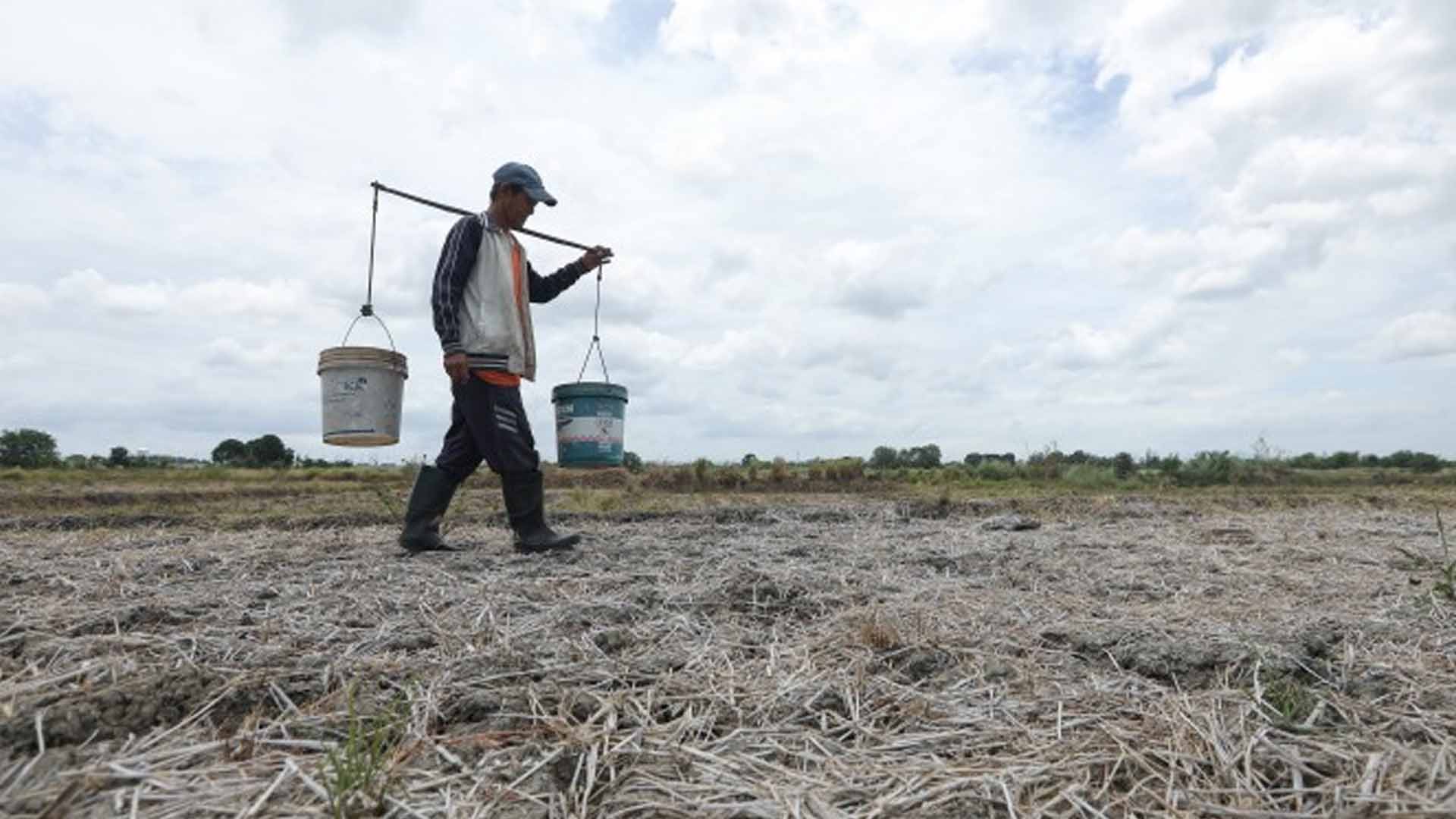







Six more water treatment plants are expected to become operational within the year, adding about 452 million liters of clean water per day to the supply of Metro Manila and nearby provinces amid the threat of El Niño.
In a Bagong Pilipinas interview on Tuesday, Metropolitan Waterworks and Sewerage System (MWSS) spokesperson Patrick Dizon said the facilities are part of efforts to develop water sources outside Angat Dam, which currently provides about 90 percent of Metro Manila’s water supply.
Dizon said currently, there are five water treatment plants from Laguna Lake that supply clean water to Metro Manila households.
He said of the additional water treatment plants, three are located in Cavite and one each in Pasay, Antipolo, and the east bay of Laguna Lake.
“So, sa kabuuan po ay mayroon po tayong inaasahan na around 452 million liters per day na dagdag na tubig na puwede po nating i-supply sa atin pong mga kababayan since magkakaroon po ng El Niño this year (Overall, we are expecting around 452 million liters per day of additional water that we can supply to residents as there will be an El Niño this year),” he said.
He said the MWSS and its concessionaires have been preparing for the expected El Niño for the past two years, including developing additional water sources as part of the government’s water security measures.
Dizon said Angat Dam reached its lowest elevation this year since its construction in 1967.
Despite this, he said, the MWSS avoided supply interruptions even when the reservoir level fell to 150 meters because of contingency and mitigating measures.
Under normal conditions, interruptions may occur once Angat reaches its critical level of 160 meters, he said.
Aside from the six new treatment plants, the MWSS is also preparing rehabilitated deep wells that could provide about 85 million liters per day. Dizon said deep wells have not been used since 2014 because of land subsidence.
The National Water Resources Board (NWRB) implemented a moratorium and ban on the construction of new deep wells and deep-water drilling through Resolution 001-0904.
This prohibited new deep-well construction and further groundwater extraction in identified critical zones in Metro Manila and specific areas in Bulacan and Cavite.
“Pero noong 2019 po ‘no, ay nag-request na po tayo sa NWRB na bigyan po tayo ng temporary permits po para ma-operate po ito. So, ang ginawa po namin, kasama po ng ating konsesyonaryo ay ni-rehabilitate po natin iyong mga deep wells po na ito. So, sa ngayon po ay naka-prepare na po around 85 million liters per day po iyong atin pong naka-prepare na puwede pong mag-operate po ng mga deep wells (But in 2019, we requested the NWRB to grant us temporary permits to operate these. So, what we did, together with our concessionaire, was rehabilitate these deep wells. So, as of now, we have prepared about 85 million liters per day that can operate the deep wells),” Dizon said.
He also said they built additional water treatment plants equipped with new water technologies to treat wastewater.
“Instead of itapon natin sa mga ilog po ay ginagawa po natin ay nagtayo po ng mga additional na water treatment plants para i-treat pa po ito, para pumasa sa Philippine National Standard for Drinking Water. So, mayroon na po tayong existing po na isa at mayroon pa rin pong parating na dalawang new treatment plant na puwede pong mag-operate during the El Niño (Instead of throwing it into the rivers, what we are doing is building additional water treatment plants to treat it further, so it meets the Philippine National Standard for Drinking Water. So, we already have one existing treatment plant, and there are two new treatment plants coming that can operate during the El Niño),” Dizon said.
The MWSS is also rehabilitating old aqueducts, tunnels, and pipelines to reduce water losses, including facilities built in the 1930s and 1940s.
For possible supply interruptions, the agency has prepared 135 stationary pumps and 105 mobile water tankers, with additional assistance expected from local government units.
Meanwhile, Dizon urged the public to conserve water, saying the effects of El Niño could be felt until 2027.
“Kaya patuloy po kaming nananawagan po, gaya po ng panawagan po ng atin pong Department of Energy sa pagtitipid po ng kuryente at sa gasolina ay gayundin po iyong atin pong panawagan sa patuloy po, na pag-practice po nitong tinatawag po nating wise use of water (So we continue to call for, just like the call from our Department of Energy to conserve electricity and gasoline, as well as our call for the continued practice of what we call the wise use of water),” he said. (PNA)