



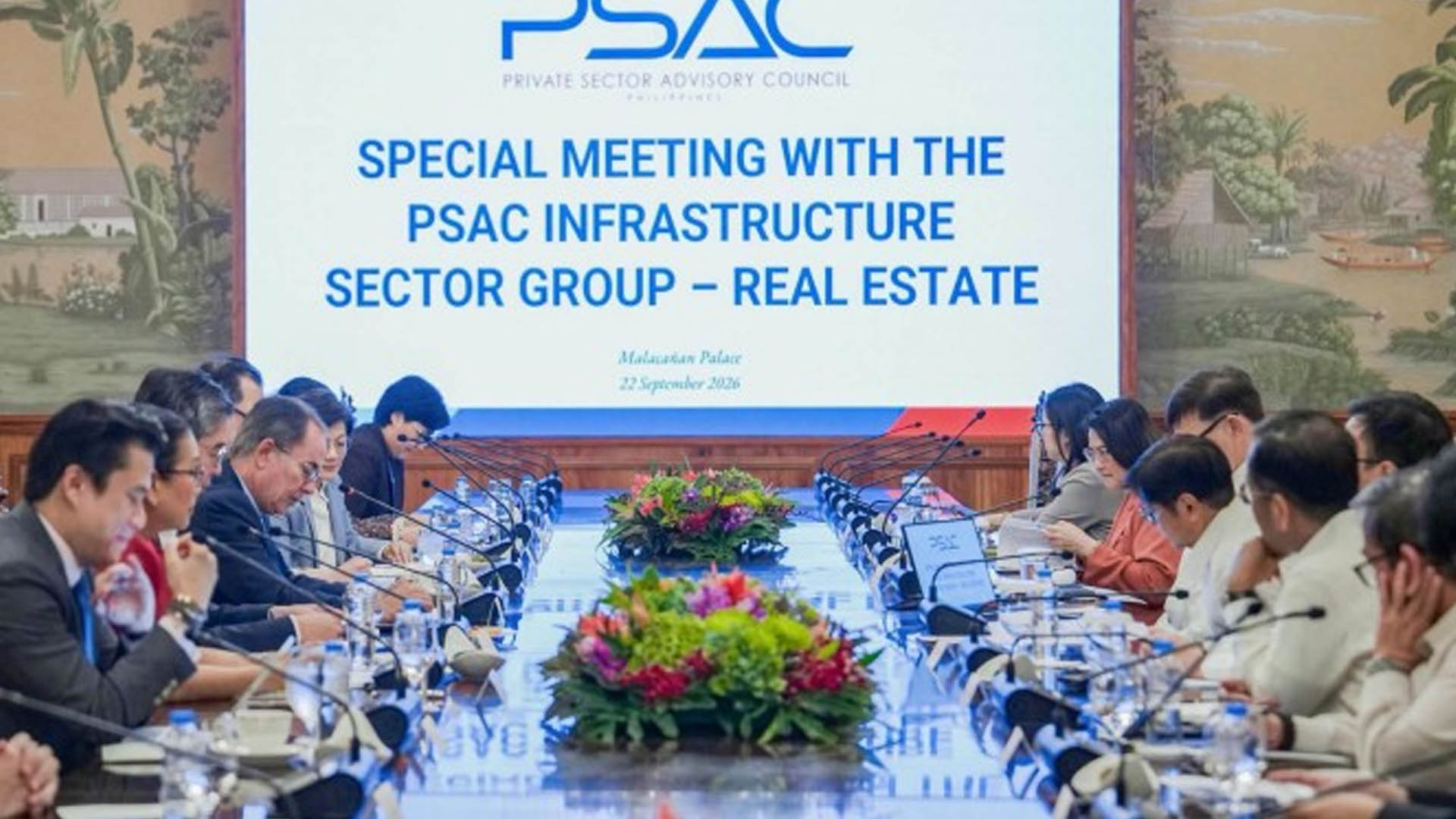







The Private Sector Advisory Council (PSAC) – Infrastructure Sector is proposing a four-year deferment of the implementation of the Real Property Valuation and Assessment Reform Act (RPVARA) to give property owners and local governments more time to adjust.
The proposal was presented during a meeting between the PSAC – Infrastructure Sector and President Ferdinand R. Marcos Jr. at Malacañan Palace on Tuesday to discuss opportunities and challenges faced by the real estate sector.
In a statement on Friday, the council said it asked the President to delay the implementation of RPVARA or Republic Act (RA) No. 12001 by four years, citing the economic pressures faced by the real estate and housing sectors.
The PSAC-Infrastructure Sector proposed moving the start of implementation to 2031, extending the real property tax amnesty by four years and adopting a phased transition that would cap annual real property tax increases at six percent during the first three years.
“Real estate remains an important part of the Philippine economy,” it said, noting that every PHP1 spent on real estate generates an estimated PHP3.44 in economic output, supporting construction, banking, retail, logistics, business process outsourcing and tourism.
The council also noted that the construction sector alone employs about 4.7 million Filipinos, accounting for the 9.6 percent of the country’s workforce.
Other reforms
The council also proposed an Urban Housing Affordability Program to help address the country’s estimated 3.7-million-unit housing backlog.
Under the proposal, developers could offer existing higher-priced, ready-for-occupancy condominium units at substantial discounts in exchange for incentives or credits toward balanced housing requirements.
“This could give more families access to urban housing while helping move existing housing inventory,” the PSAC-Infrastructure Sector said.
It likewise recommended accelerating the adjustment of socialized housing price ceilings within 2026, amid rising construction costs and ahead of the scheduled December 2027 review.
The council also proposed further government-private sector consultations on alternative ways for developers to meet balanced housing requirements.
The recommendations come as real estate’s contribution to the country’s gross domestic product stood at 5.8 percent in the first quarter of 2026, compared with the 6.65 percent pre-pandemic average in 2018 and 2019.
The PSAC-Infrastructure Sector cautioned that slower project launches and construction could affect employment, housing delivery, and local government revenues.
The meeting also covered the proposed National Artificial Intelligence (AI) Implementation Task Force to help the country respond to AI-related risks and opportunities, particularly for the information technology and business process management (IT-BPM) workforce.
The council also cited the government’s lifting of the Philippine Economic Zone Authority’s moratorium on IT centers and IT parks in Metro Manila.
“Through these recommendations, PSAC seeks to support a balanced approach that considers housing affordability and manageable property costs while sustaining investment, construction and jobs across the economy,” it said. (PNA)