




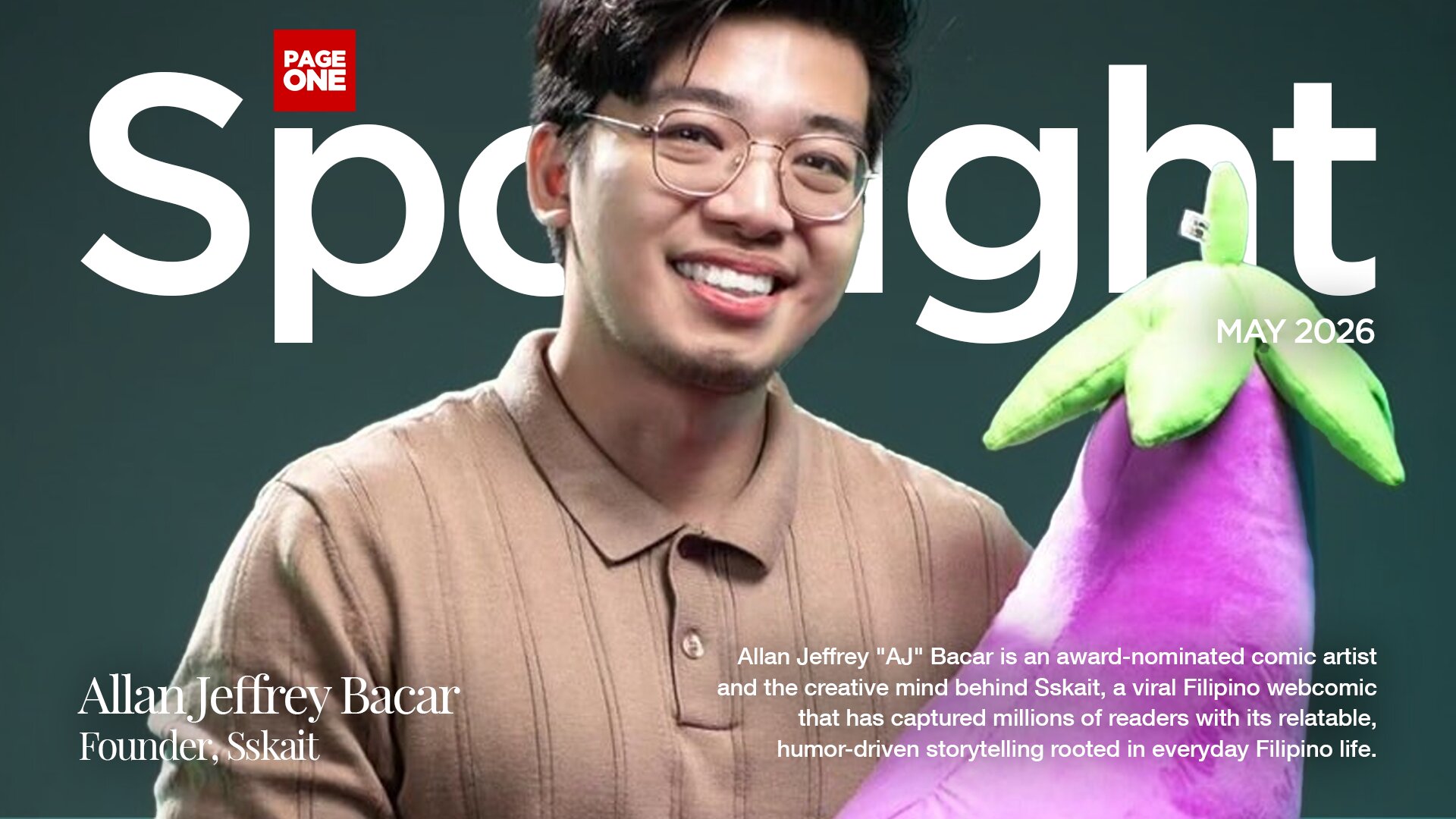







Before Sskait became a page followed by nearly a million readers, it was simply a space where Allan Jeffrey “AJ” Bacar could turn passing thoughts into comics.
Today, the comic artist behind Sskait is known for stories that feel distinctly Filipino, balancing absurd humor with sincerity, internet chaos with quiet reflection. But as the audience grew, so did something less visible: responsibility.
For AJ, influence did not arrive through follower counts or viral statistics. It arrived through messages.
The shift became clear when readers began sharing stories far more personal than simple reactions to a comic strip.
“Siguro when I started receiving messages na, really personal, and how my comics helped them and feel heard,” AJ says.
What had once been a creative outlet slowly became something heavier to carry. Readers were not only laughing at Sskait comics. They were finding pieces of themselves inside them.
That realization became even sharper during the pandemic.
Before lockdowns and uncertainty reshaped everyday life, AJ regularly explored darker humor online. But when the emotional atmosphere changed, so did the comics.
“Pre-pandemic, I used to post a lot of dark humor stuff,” AJ recalls. “But when pandemic came, a lot of people felt so heavy, I stopped making dark humor comics and focused on light funny humor and stories.”
The adjustment, he says, did not feel forced. The storytelling remained the same, but the sensitivity behind it became more deliberate.
That instinct to read the emotional room may explain why Sskait resonates so widely. The page has always been built around relatability, something AJ says is embedded even in its name.

“SSKAIT stands for Siya, Sila, Kayo, Ako, Ikaw, Tayo,” he explains. “It is a story of my friends and family, myself, the people around me, current happenings and of everyone.”
The acronym feels less like branding and more like a mission statement.
Readers encounter themselves inside Sskait because, in many ways, AJ is drawing from the same shared landscape they inhabit. The stories come from friendships, family moments, awkward encounters, current events, and the strange humor that Filipinos naturally create around ordinary life.
That perspective has also shaped how AJ approaches inclusion and advocacy through comics.
One of Sskait’s most widely discussed works, a Love Month strip about coming out to parents, sparked conversations that extended well beyond the comment section. Yet AJ does not see advocacy and comedy as opposing goals.
“Inclusivity has always been a part of my stories,” AJ says, laughing as he adds, “May halong dogshow lang ng konti.”
Behind the humor, however, sits a deeper philosophy.
“I believe that art is made with a purpose in mind,” AJ says. “Same sa comics, as a storyteller, I make some comics with a purpose in mind. Some comics, the point is just to make a funny banter, and some, may deeper meaning.”
For AJ, making a point is not separate from making a comic. It is often part of the process itself.
That balance becomes more complicated once art enters the realities of business.
Like many independent creators, Sskait now works with commercial partners and brands. The challenge, AJ admits, lies in preserving trust while meeting the expectations that come with collaboration.
“My goal as a storyteller is to make stories that leave a positive impact to the readers,” AJ says. “Whenever I do brand collaborations, that’s the value that I have in mind.”
That means sponsored work is rarely straightforward.
For AJ, the task is not merely inserting a product into a comic but building a story that still feels genuine to the audience who has supported him from the beginning.
“It really takes a lot of time and skills,” he says.
At the same time, AJ speaks warmly about brands that choose to support artists directly.

“In this world full of AI and garbage content, for them to choose us speaks for the value of the brand din,” AJ says. “And I really appreciate it.”
The collaborations closest to him are often the ones centered on real people and lived experiences.
“There are some brands I worked with that doesn’t feel like work to me,” AJ shares. “Specially the authentic ones where I highlight stories of real people. It feels so close to my heart.”
That closeness reflects how AJ understands Sskait itself.
The page may look effortless from the outside, but the creator behind it thinks carefully about what kind of emotional space he is building online.
“As your platform grow, so does your responsibilities,” AJ says.
For him, comics have always been a form of breathing space.
“And I grew a community who shared the same feeling as me.” he explains.
The responsibility, then, is not necessarily about controlling interpretation. It is about remaining aware of sensitivity, timing, and the emotional realities readers bring with them.
That awareness also shapes the lines AJ refuses to cross.
While many online creators accept lucrative endorsements with few reservations, AJ says Sskait has maintained a firm position for years against promoting online gambling and casinos.
“Oh yeah, no go kami for the longest time on endorsing online gambling or casino,” AJ says.
He acknowledges how tempting such offers can be.
“A lot of celebrities do it,” AJ says. “But di talaga.”
The reason is personal and grounded in consequence rather than controversy.
“You won’t know who gets down the rabbit hole,” he explains. “Specially for families… there are families na nasira na due to it.”
It is a simple boundary, but one that reveals how AJ understands influence.
Nearly a million people follow Sskait because the comics mirror something true about Filipino life. But relatability creates more than engagement. It creates trust.
And trust, AJ seems to understand, asks for more than good punchlines.
It asks creators to know when humor heals, when stories matter, and when saying no matters even more.