











The first half of 2026 tested the Philippine economy on nearly every front, from a sharp economic slowdown and stubborn inflation to weakened public sentiment and a string of natural disasters. Yet according to PRIME Philippines’ 2026 Mid-Year Property Market Report, titled “The Confidence Gap: Closing the Distance Between Fear and Fact,” the country’s real estate sector has proven more resilient than the headlines suggest, with industrial, office, and retail segments each finding their own footing despite the turmoil.
A Squeezed Economy, But Not A Broken One
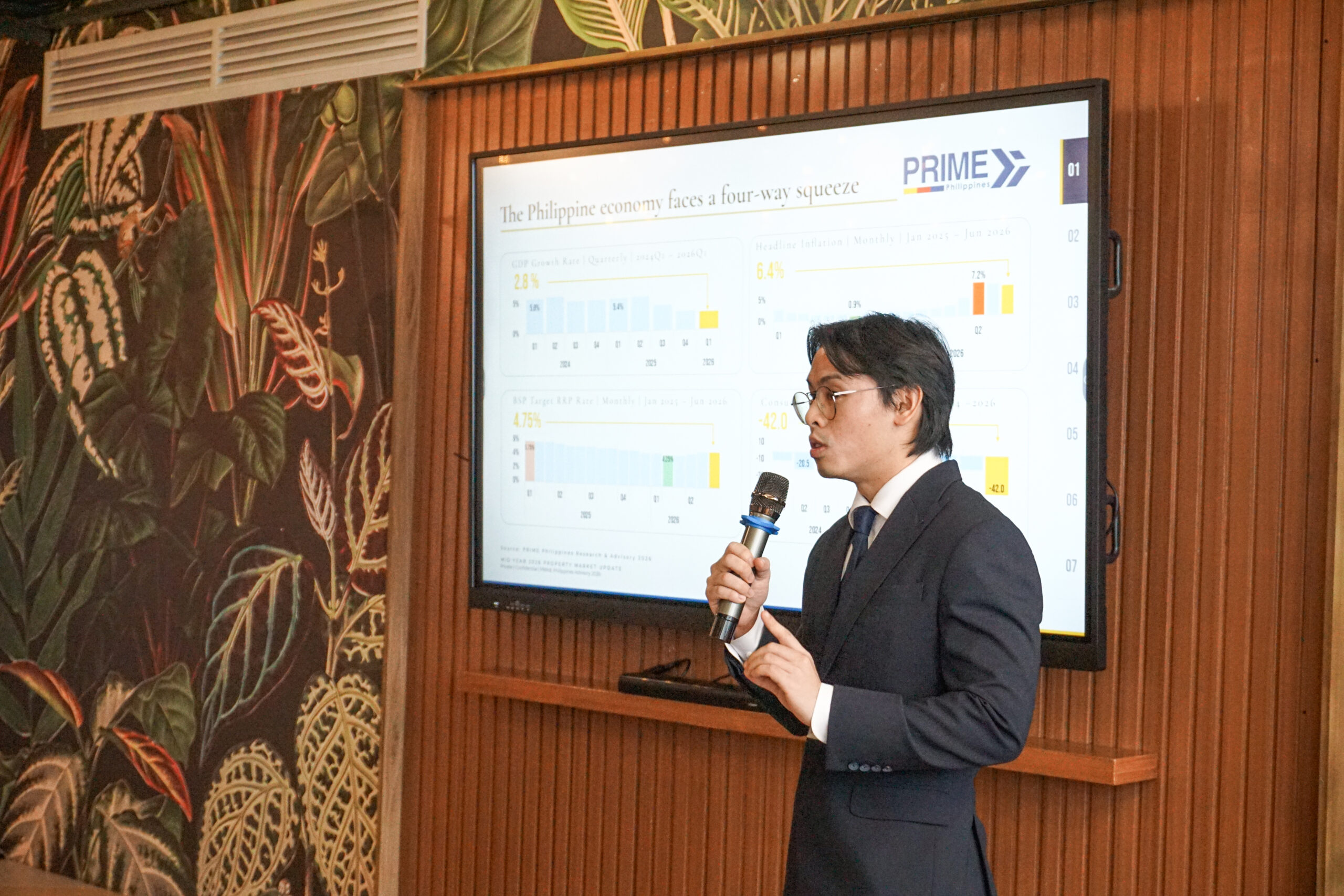
The report opens with a sobering macroeconomic picture. GDP growth slowed sharply, inflation crept back up, and the peso weakened to an all-time low against the US dollar, all while consumer confidence and presidential approval ratings sank further.
Still, PRIME Philippines points to genuine silver linings. The country’s per capita income finally crossed the upper-middle income threshold in 2025, a milestone more than four decades in the making. The weaker peso has also quietly worked in favor of the IT-BPM industry, whose dollar-earning revenues now stretch further, supporting the industry’s continued growth outlook for the year.
Despite the disruptions, including a jolt from the US-Iran War that dented incomes for a third of survey respondents, PRIME Philippines’ own stakeholder sentiment survey found that most respondents remain optimistic about the months ahead.
Retail Rides A New Generation Of Spenders
The retail sector is entering a fresh phase of growth, powered largely by the country’s youth. Nearly half of the Philippine population now belongs to the Gen Z and Millennial brackets, a demographic shift that is reshaping how brands design their stores, from sleek showroom-style concepts to expansive value retail floors and boutique DIY shops.
Mall occupancies across the country’s major developers have climbed above 90% for most players, and value retail chains continue to expand quickly alongside convenience stores and quick-service restaurants. Food and beverage remains the top priority category for malls, even though Filipinos actually dine out less frequently day-to-day than many of their regional neighbors. One challenge to watch: construction material costs, after cooling for over a year, are rising again, which could complicate expansion plans for F&B brands going forward.
Office Sector Adjusts To Overlapping Pressures
The office market had a tougher first half, contending with softer demand, uneven performance across business districts, and rising construction costs all at once. Office requirements nationwide fell by 15% year-on-year, as the IT-BPM sector’s demand for Metro Manila office space dropped in favor of the provinces and offshore markets, where labor costs run meaningfully lower.
Recovery across Metro Manila’s business districts has been uneven. Most CBDs posted modest occupancy gains, while the Bay Area, though still the market with the most ground to make up, posted a notable improvement of its own. Encouragingly, developers are tempering the pace of new supply through construction timeline recalibration, which should help ease oversupply pressure in the years ahead. Flexible workspaces are also gaining ground as a practical, lower-commitment alternative to traditional office fit-outs at a time when capital is expensive.

Industrial Remains The Quiet Powerhouse
Of the three sectors, industrial proved the most resilient, holding occupancy above 96% despite higher energy and financing costs. Manufacturing continues to anchor the bulk of demand, but third-party logistics providers stand out as a major driver as well, tied to the country’s growing e-commerce and supply chain needs.
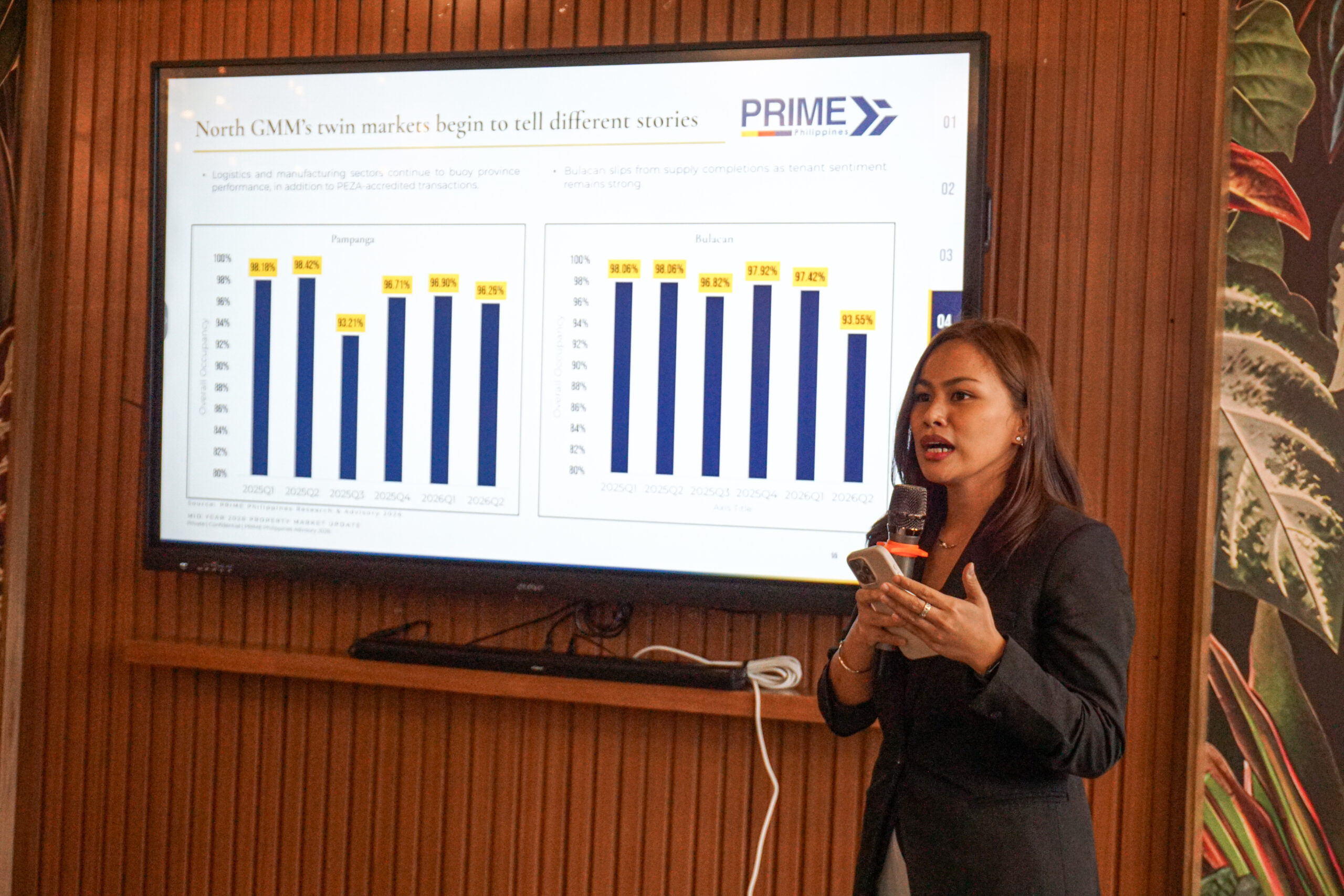
Regional performance told a more nuanced story. Pampanga stayed fairly steady, while Bulacan saw occupancy slip more noticeably as new supply came online, a divergence the report frames as North Greater Metro Manila’s twin markets starting to tell different stories. The CALABA cluster (Cavite, Laguna, and Batangas) held largely steady overall, with Batangas showing particular strength on the back of large-format manufacturing and logistics deals. Outside Luzon, Cebu and Davao continued to post consistently high occupancy, underscoring that the industrial sector’s next chapter is increasingly being written beyond Metro Manila. Rental rates followed the same momentum, with Batangas and Cebu leading a broader climb in lease rates nationwide.
The Bigger Picture
Taken together, PRIME Philippines’ mid-year findings paint a real estate sector that is adapting rather than retreating. Retail is riding a demographic wave, industrial continues to absorb shocks better than almost any other segment, and office, while under the most pressure, is recalibrating toward flexibility and decentralization rather than stalling outright. As the report’s title suggests, the gap between fear and fact may be wider than sentiment alone would indicate, and the fundamentals, for now, still hold.